
How Designers, Procurement Teams & Contractors Can Truly Deliver the Lighting Vision
10 Insights from the LiGHT25 panel on lighting design delivery: “Brilliant on Paper, Broken on Site.”
LiGHT25 is a leading UK event for architectural and decorative lighting, bringing together designers, manufacturers, integrators and contractors to focus on the realities of project delivery.
This year, two Ideaworks team members joined a panel exploring a familiar challenge: why lighting schemes that appear perfect in documentation can still unravel on site.
The discussion brought together Senior Lighting Designer Caroline Jonsson and Head of Managed Supply, James Siddle from Ideaworks, alongside Joshua Bourton (Technical Director, Westgreen Construction), Luke Cook (Associate Director, Darke & Taylor) and Sandra Babini (Business Development Manager, Lumino).
Together, they examined how void changes, cable shifts, joist clashes and missing detail can undermine design intent. Here are the key takeaways on how teams can keep lighting brilliant on paper and on site.
1. Start With the Same Foundation: Baseline Deliverables
Projects run into trouble when they start underpriced and under-defined. Successful teams agree on fundamentals early.
High-performing teams:
Align on baseline deliverables at the outset
Use unified templates with must-haves and clear exclusions
Share project priorities (cost-led, performance-led or quality-led)
Treat Stage 5 lighting designer involvement as essential risk mitigation
Bring contractors in before design freeze
Why early contractor input matters:
Contractors offer real-world checks on:
Ceiling void capacity
Cable distances
PSU hub strategy
Joist clashes
Mounting methods
Construction sequencing
Key message: Early contractor involvement removes surprises later.
2. The Big Gaps in Lighting Packs – and How Contractors Fill Them
Lighting documentation can appear complete yet still lack buildability detail.
Common gaps:
PSU hub locations missing
Cable distance limits unclear
Access strategies undefined
Ceiling depths incomplete
Fittings drawn through joists
Unrealistic build-in details
Contractor Insight #1: PSU hub strategy has major cost impact
Local hubs reduce cabling and labour. Central hubs can sharply increase costs.
Agreeing on the strategy early avoids last-minute VE and unnecessary spend.
Contractor Insight #2: Tender reviewers are visual – and often rushed
Critical fitting information must be visible on drawings, not buried in schedules. This prevents:
Wrong assumptions
Missing plaster kits
Incorrect finishes
Missing accessories
Small presentation tweaks reduce significant errors.
Contractor Insight #3: Contractors want early visibility
Even draft designs help them flag:
Buildability issues
Installation constraints
Structural clashes
VE opportunities that protect quality
Early sharing boosts collaboration without adding scope.
3. Early Conversations: The Shortcut to Buildability
Early coordination beats late correction.
Bringing designers, joiners, procurement teams and contractors together unlocks:
Mock-up requirements
Realistic void checks
Clear VE boundaries
Shared priorities
Early structural clash detection
Early coordinated detailing between the lighting designer, contractor and architect.
Contractors help ground creative intent in construction reality.
4. Common Failure Points – and How Early Involvement Prevents Them
Typical causes of lighting failure:
Reduced void depths
Driver access issues
Late design changes
Poor documentation after changes
Late discovery of joist clashes
Real-time communication solves issues quickly and ensures everything is captured in drawings. With early contractor input, most issues disappear before they affect the programme.
5. Linear Lighting: The Ultimate Coordination Test
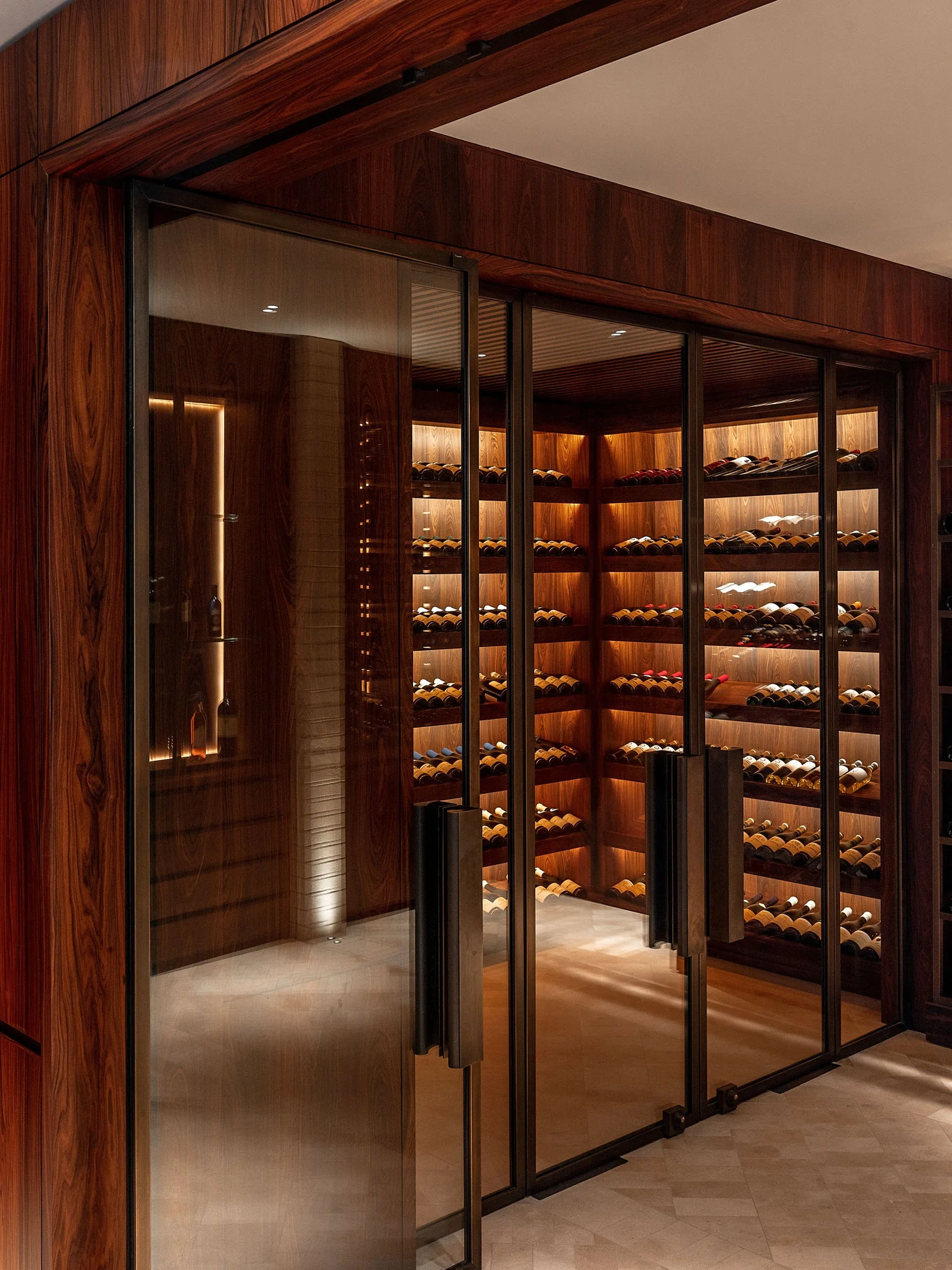
Linear lighting is visually powerful but highly sensitive to coordination.
Without early involvement, problems include:
Misaligned channels or profiles
Incorrect cut lengths
Missed joinery constraints
Installation tolerances overlooked
Best practice:
Joint workshops (designer, contractor, joiner)
Shared templates for channel lengths, cut points and tolerances
Early review of recess depths to keep linear discreet
Upfront installation risk reviews
Appropriately handled, linear lighting can move from a risk to a project highlight.
6. Finishes and Sign-Offs: Protecting the Visual Result
Technically correct lighting can still look wrong if finishes shift late.
Success relies on:
Early finishes meetings
Clear ownership and documentation
Formal change control
Education around reflectivity
Contractors support sequencing and protection to preserve the lighting effect.
7. Technology Helps, But Conversations Deliver
Platforms like Asite and Aconex track decisions, but they can’t spot:
Buildability risks
Joist clashes
Ceiling constraints
Fixing conflicts
Only early human conversations can do this.
8. Face-to-Face Workshops: Problems Solved in Hours
When contractors join early:
Issues are resolved quickly
Risk becomes shared
Sequencing becomes logical
Costs align collaboratively
Structural clashes are caught immediately
This is when a group becomes a project team.
9. Showing True Value to Clients
Clients understand lighting value when:
Priorities are defined early
Light effect is prioritised over luminaire cost
Lifecycle value is explained
Visual comparisons show performance differences
Contractors reinforce this by explaining durability, access and maintenance.
10. Value Engineering Done Properly
Good VE is collaborative, not reductive.
Effective VE:
Protects performance
Refines, rather than downgrades
Uses tiered options
Redirects spend to high-impact areas
Prevents redesign caused by avoidable clashes
With early contractor involvement, VE becomes strategic.
Closing Remarks
The panel’s message was unambiguous: Bring contractors in early. Deliver better every time.
Designers set the vision. Procurement ensures precision. Contractors ground everything in buildable reality – flagging clashes, cable limits, access needs and installation risk before they become problems.
When these three disciplines collaborate from the beginning, lighting doesn’t just look brilliant on paper. It’s brilliant on site.
Watch the full presentation here.
If you’d like to know more about how Ideaworks' Lighting can support your project from design through to installation, please get in touch.