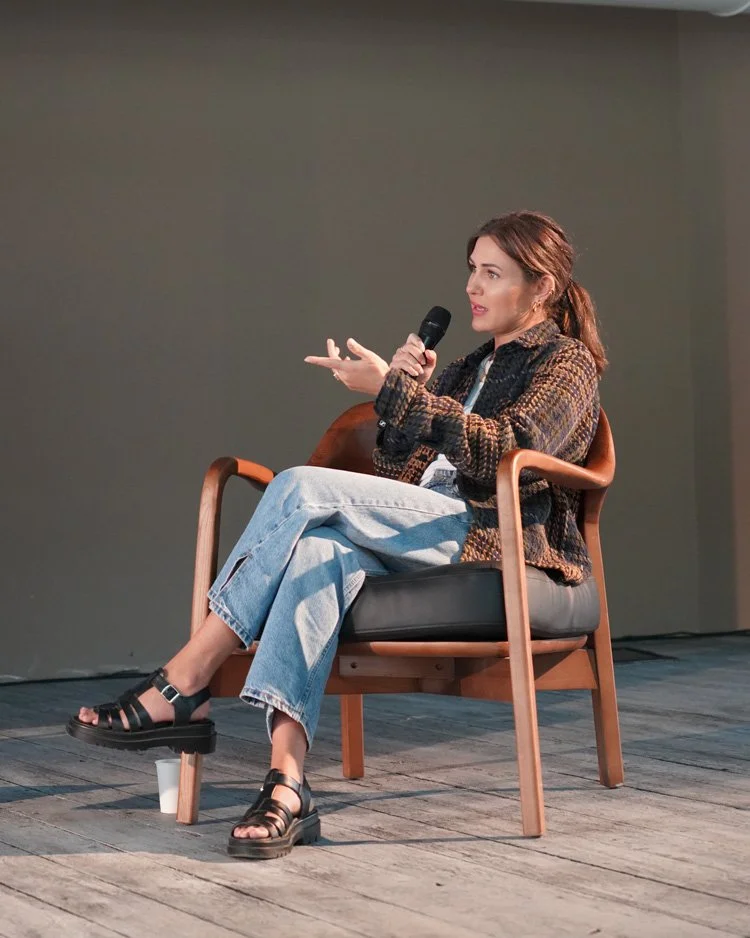
Lighting is for People, not Buildings.
Caroline Jonsson, Senior Lighting Designer, reflects on her panel discussion at this year’s [d]arc sessions, in Sicily.

At [d]arc sessions, I joined a panel exploring the idea, ‘light is for people, not buildings’. A statement that sounds simple at first but becomes more complex the longer you sit with it.
In practice, we are often designing for many things at once: the architecture, the interior, the budget, the technology, the handover, and, increasingly, the photograph.
A recurring theme throughout the discussion was the importance of considered lighting within interiors. As lighting designers, especially when working alongside some of the best interior design studios in the world, we have a responsibility to reveal the richness of those spaces - the materiality, the colour, the craft and the atmosphere - without losing sight of the person who will live with the lighting day to day.
One panellist described lighting as another layer of architecture, which I thought was an interesting way of framing it. At its best, lighting is not separate from the space; it is part of how the architecture is revealed, understood and felt. As lighting designers, we also know that this only really happens when we are engaged early enough to influence the project properly - when light can be integrated into the ceiling strategy, joinery, materiality, scene-setting, controls and spatial experience, rather than applied to decisions that have already been fixed.
The end user does not experience the scheme as a design package. They experience it as part of daily life.
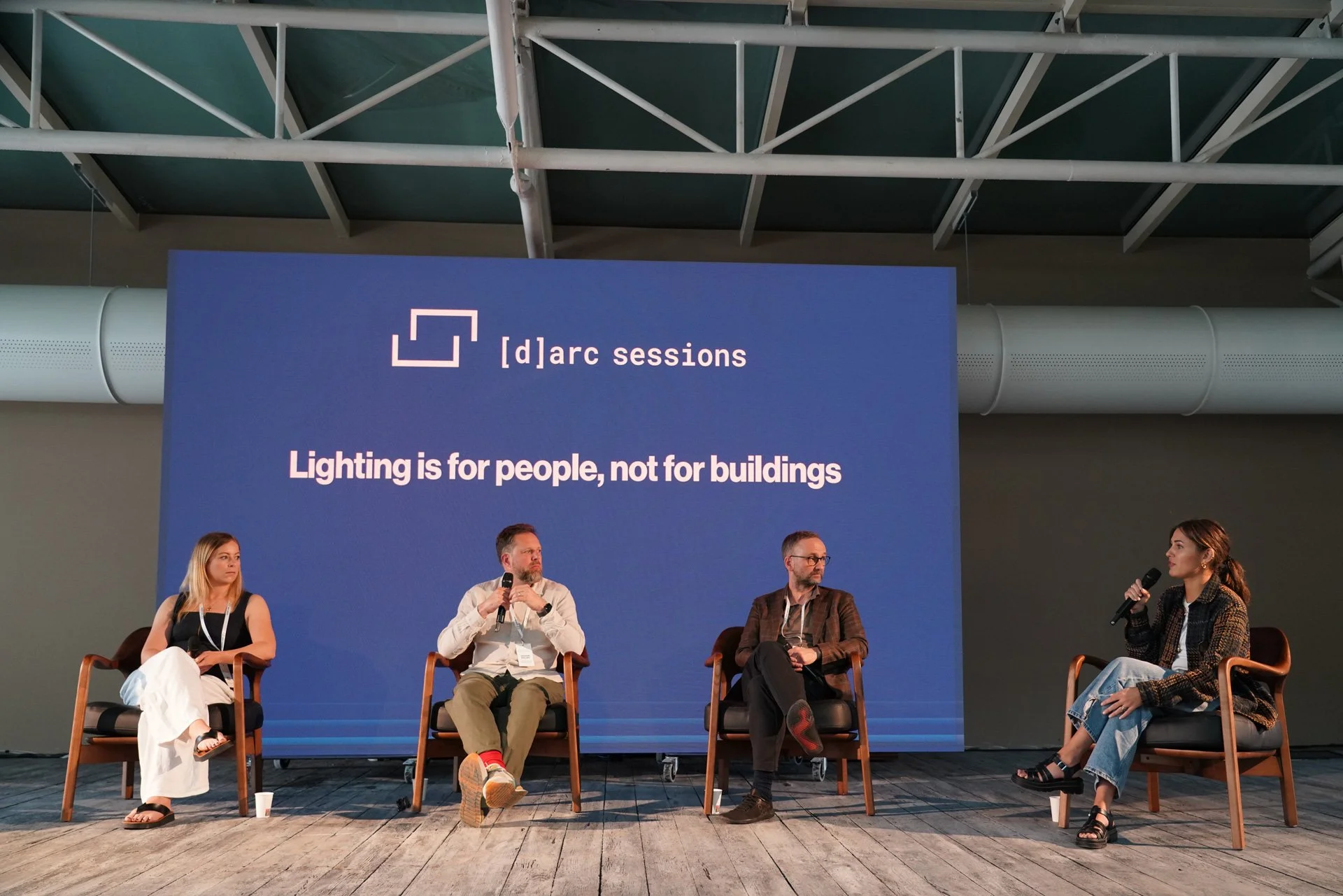
Beth Harle of David Collins Studio, Graham Rollins of Lighting Design International, Kristján Kristjánsson of Hildiberg.
Lighting Beyond the Visual
One question we returned to was whether design culture has become too image-led. So much of our work is now judged through renders, photography, awards entries and social media. A powerful image matters. It can communicate atmosphere instantly. But it does not tell the whole truth.
Designing for Real Life, Not Rendered Moments
A space can look extraordinary in an image and still fail to feel comfortable in real life.
The real test of lighting is not only how it looks in a controlled image, but how it behaves in time: at dinner, at dusk, at midnight, when someone is moving through a space half-awake, or in the quiet ordinary moments when people are simply living with it. It is also how gracefully it ages - whether the scheme still feels considered in ten years’ time, whether the fittings can be maintained, the technology can adapt, and the atmosphere still has relevance beyond the first photograph or the first evening after handover.
The Human Impact of Light Quality
We also discussed wellbeing and light quality. One comment that stayed with me was the suggestion that LEDs still do not always give us better light. It was deliberately provocative, but I understood the point. The move to LED gave us enormous benefits in efficiency, control and flexibility, but it did not automatically give us better light, or better outcomes for people.
Light affects far more than visibility; it influences comfort, mood, alertness, sleep/wake rhythms and how we feel and function within a space. If the quality of light is poor, the technology may be efficient, but the human experience is still compromised.
Rediscovering What Good Light Feels Like
We are still trying to recover qualities that older light sources gave us almost effortlessly: warmth, softness, depth, colour richness and a more forgiving relationship with material and skin tone. As full-spectrum systems, biophilic lighting and wellness-led language become more prominent, I think we need to be careful not to replace one technical compromise with another marketing narrative.
Better light is not simply more advanced light; it is light that feels right to the human eye and generous to the surfaces it touches - revealing material, texture and imperfection with the softness and variation we instinctively recognise from nature.
Rethinking Layers and Over-Lighting
One audience question that stayed with me was: when will we stop over-lighting and stop talking about lighting layers?
For me, good lighting design should never be about over-lighting. Layers should not exist to add complexity, or to prove that a scheme has been “designed”. They should exist because the space, the architecture and the people using it require variation - not unlike daylight itself, which is never static, uniform or without hierarchy.
A client does not experience “five or six layers” as a technical diagram. They experience a tactile interaction with a keypad: a brighter practical setting, an entertaining scene, a softer evening mood, and the smooth transition between them.
Simplicity Through Technical Resolution
That is where the real design work sits: in resolving the technical complexity so the experience feels effortless. The fitting, driver, control system, scene logic and interface all need to work together so the layers feel quiet, intuitive and effortless in use.
When Every Layer Has a Purpose
The aim is not simplicity for its own sake, but clarity of purpose. Perhaps the question is not whether we should stop talking about layers, but whether every layer has earned its place. Some layers support the person. Some reveal key architectural features. Some bring depth, hierarchy or focus. But none should be there by default, because if we light everything, we light nothing.
The value of a layer depends on the project's context, too: whether it improves usability, strengthens the atmosphere, creates hierarchy, supports flexibility, or reveals something essential about the space.